
Quick answer: If your teenager has a fender bender, the first priority is safety: check for injuries, call 911 if anyone is hurt, and move to a safe spot if the cars can be driven. Then your teen should exchange information with the other driver, take photos, avoid arguing about fault, and call you. In New Jersey, a crash must be reported to the police if anyone is injured or killed, or if property damage to any one person is over $500. After that, notify your insurance company and have the car inspected before deciding how to repair it, because a small-looking dent on a modern car can hide damaged sensors or brackets.
A teenager’s first fender bender is stressful for the whole family, especially when nobody is sure what comes next. The good news is that most minor collisions follow the same simple steps. This guide covers what your teen should keep in the car, what to say at the scene, how to handle their phone call, how insurance and New Jersey reporting rules work, and how to get the car repaired properly.
In this guide:
- What Should Your Teen Do Right After a Fender Bender?
- The Glove Box Kit Every New Driver Should Have
- A Simple Script for Your Teen at the Scene
- What to Say When Your Teen Calls You (and What Not to Say)
- Do You Have to Report a Minor Accident in New Jersey?
- Teen Driver Rules in New Jersey That Still Apply After a Crash
- How a Claim on a Parent’s Policy Works in New Jersey
- Why a “Small” Fender Scrape Is Not Small on a Modern Car
- How a Dented Fender Can Be Fixed Without Repainting the Whole Side
- How Long Will the Car Be in the Shop?
- Turn the First Fender Bender Into a Driving Lesson, Not a Punishment
- Getting Your Teen’s Car Repaired at Northeast Collision
- Frequently Asked Questions
What Should Your Teen Do Right After a Fender Bender?
Give your teen a short, clear checklist they can follow even when adrenaline is high:
- Stop and stay calm. Turn on the hazard lights. Never leave the scene of a crash.
- Check for injuries. If anyone is hurt, call 911 right away and follow the instructions of responders.
- Move to safety if possible. If the cars can be driven and no one is hurt, move out of traffic. If not, stay buckled in with hazards on until help arrives.
- Call the police when required. In New Jersey, crashes involving injury, death, or property damage over $500 must be reported to the police. With today’s repair costs, even a small dent can pass that amount.
- Exchange information. Get the other driver’s name, phone number, license number, insurance company and policy number, plate number, and vehicle make and model.
- Take photos. Photograph both cars from several angles, the license plates, the damage, road conditions, traffic signs, and the wider scene.
- Get witness details. Ask any witnesses for their names and phone numbers.
- Call a parent. Then contact your insurer together.
For the full step-by-step process for any driver, see our guide on what to do after a car accident in New Jersey.
The Glove Box Kit Every New Driver Should Have
Your teen may never need it, but a small kit in the glove box keeps a stressful moment from turning chaotic. Make sure the car has:
- Insurance identification card and current registration. New Jersey drivers must be able to show proof of insurance and registration.
- Emergency contacts on paper: your name and number, plus another trusted adult.
- A pen and small notepad in case the phone battery dies.
- A flashlight for nighttime or poorly lit parking lots.
- A phone charging cable or power bank.
- Basic first-aid supplies.
- Roadside assistance details, including the provider’s number and policy information.
Before your teen drives alone, make sure they know where the hazard lights, parking brake, and basic safety equipment are. The goal is not to turn a teenager into an accident expert. It is to make sure they can find what they need when stress makes it hard to think.
A Simple Script for Your Teen at the Scene
New drivers often know the rules but forget them the moment another car bumps theirs. A short script helps:
- “Is everyone okay? Let’s move somewhere safe if we can.”
- “Let’s exchange insurance and contact information.”
- “I’m going to take photos of the cars and the scene.”
- “My parent is on the way, and we’ll call the police if needed.”
That is enough. Your teen does not need to debate who was at fault, guess what repairs will cost, or promise to pay anything on the spot. They should avoid admitting fault or making statements they cannot back up, and simply let the facts be recorded.
What to Say When Your Teen Calls You (and What Not to Say)
The first call might sound like: “I hit someone.” Your first instinct may be to ask how it happened. Save that conversation for later. Start with:
- “Are you okay? Is anyone else hurt?”
- “Are you somewhere safe?”
- “Did you call the police or 911 if it was needed?”
- “Did you get the other driver’s information and take photos?”
- “Does the car seem safe to drive?”
- “Tell me what happened in your own words.”
Avoid shouting, threatening punishment, or talking about cost right away. A teen who is scared of being grounded may make poorer decisions, leave out important details, or be tempted to hide damage. You can talk about consequences later. In the moment, safety and accurate information come first.
Do You Have to Report a Minor Accident in New Jersey?
Under N.J.S.A. 39:4-130, the driver of a vehicle involved in a crash that causes injury or death, or damage to any one person’s property of more than $500, must report it by the quickest means to the local police, the county police, or the New Jersey State Police. Because even modest bumper or fender repairs can exceed $500, it is usually safer to call the police and get a report when another vehicle is involved.
Separately, you should notify your insurance company promptly, as your policy requires. Your insurer will tell you what information it needs.
Teen Driver Rules in New Jersey That Still Apply After a Crash
Most teens in New Jersey drive under the Graduated Driver License (GDL) program. According to the New Jersey Motor Vehicle Commission, drivers under 21 with a permit or probationary license:
- May not drive between 11:01 p.m. and 5:00 a.m.
- May carry only one passenger in addition to parents, guardians, or dependents, unless a parent or guardian is in the car.
- May not use a hand-held or hands-free phone or other interactive wireless device.
- Must display the red, reflective GDL decals on the front and rear license plates.
After a fender bender, it is worth reviewing these rules together. If the car needs a rental or loaner while it is repaired, the same rules apply, so make sure the decals go on that vehicle too.
How a Claim on a Parent’s Policy Works in New Jersey
In many families, a newly licensed teen is added to a parent’s auto insurance policy rather than getting a separate one. That means a claim from your teen’s accident is usually handled under your policy.
What happens next depends on who was at fault, the coverages on your policy, the extent of the damage, and your insurer’s rules. In general terms, collision coverage pays to repair your own car (minus your deductible), while liability coverage pays for damage or injuries your driver causes to others, up to your policy limits. If the other driver was at fault, their insurer may pay for your repairs.
Before deciding whether to file a claim or pay yourself, get the damage properly assessed. A scratch that looks minor can turn into a larger repair once the bumper or fender is removed. Our guide to filing a claim or paying out of pocket in New Jersey explains the trade-offs, and our collision repair cost guide shows what drives repair prices.
Why a “Small” Fender Scrape Is Not Small on a Modern Car
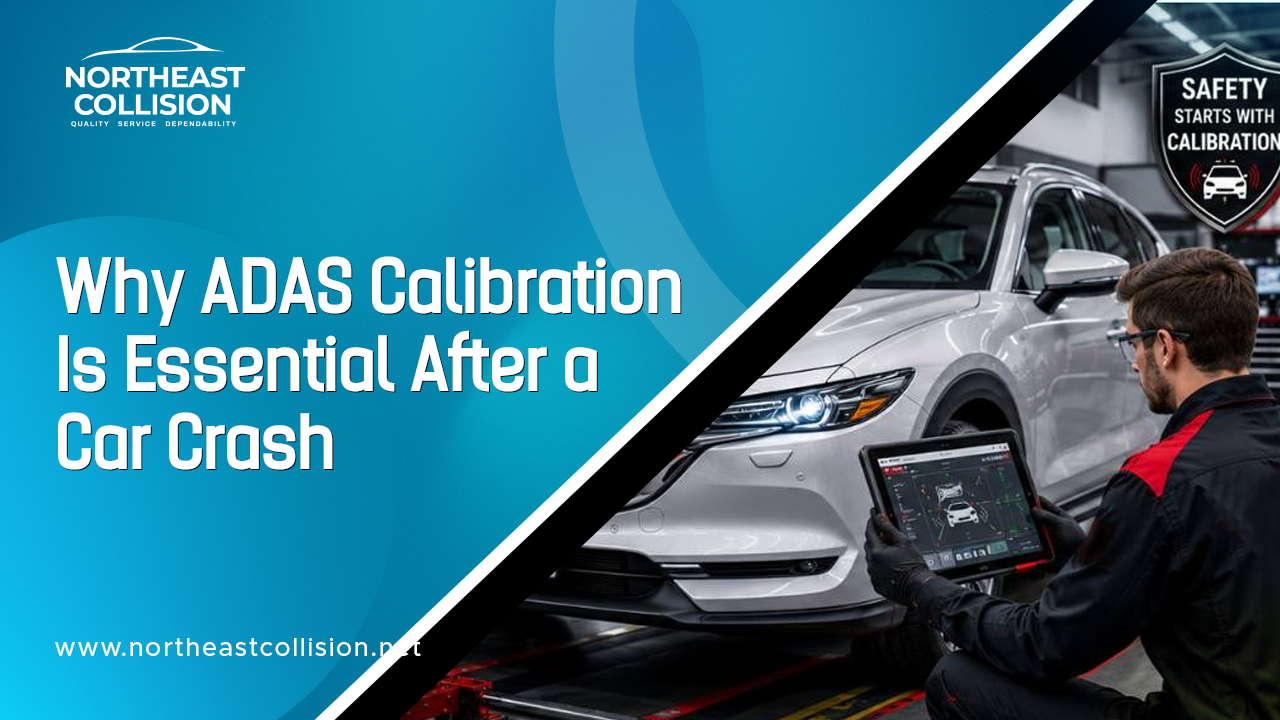
A bumper or fender may look like it only needs a touch-up, but newer cars have parking sensors, blind-spot radar, cameras, and other driver-assistance parts built into or behind those panels. Damage, incorrect paint thickness, or misalignment can affect how these systems work, and some systems need calibration after repairs. Our guide to ADAS calibration after collision repair explains why.
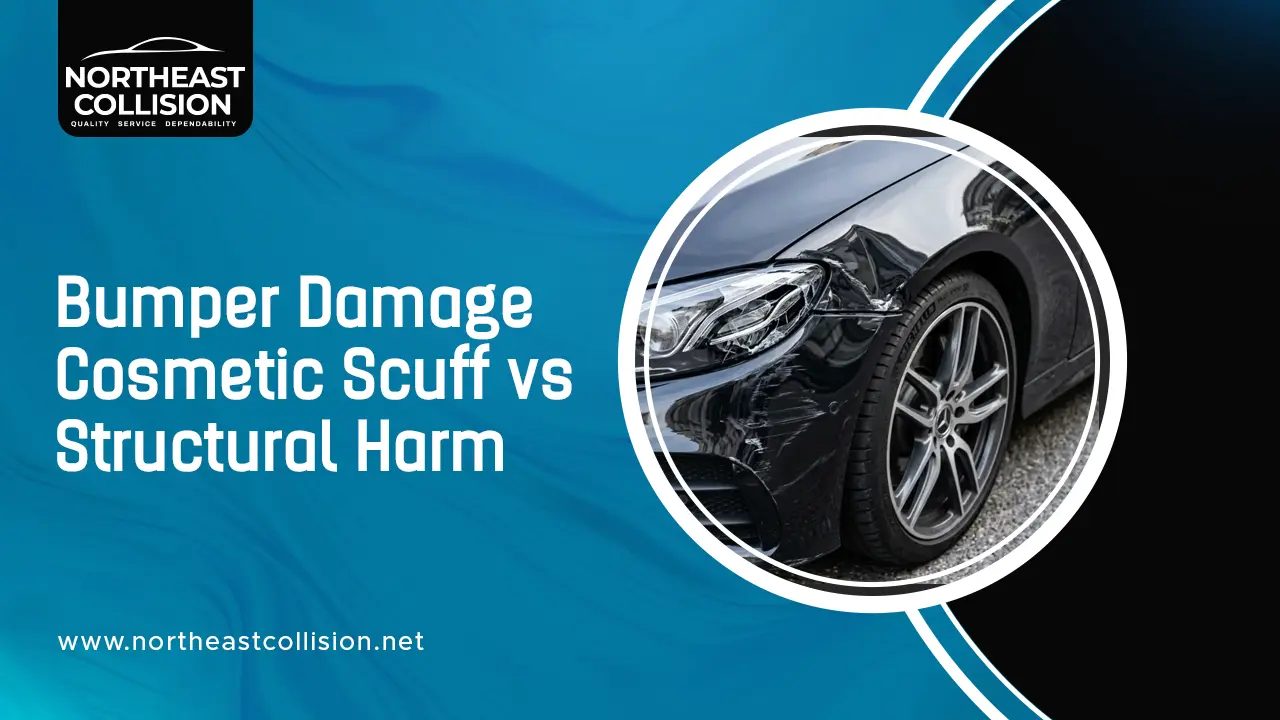
Even a low-speed bump can crack an energy absorber or break mounting tabs behind a bumper cover that looks almost normal. Our guide to car accident bumper damage shows how to tell a cosmetic scuff from something more serious, and a post collision inspection confirms the car is safe to drive.
How a Dented Fender Can Be Fixed Without Repainting the Whole Side
A dent does not mean the whole side of the car needs paint. The right repair depends on the damage:
| Type of Damage | Common Repair Approach |
| Small dent, paint not cracked or chipped | Paintless dent repair: the metal is reshaped from behind, with no new paint |
| Dent with scratched, chipped, or cracked paint | Conventional dent repair, then refinishing |
| Scratch or scuff with no dent | Car paint scratch repair on the affected area |
| Bent, torn, or badly creased fender | Fender repair or replacement |
| Bumper cover cracked, loose, or pushed in | Bumper collision repair, with a check of the parts behind it |
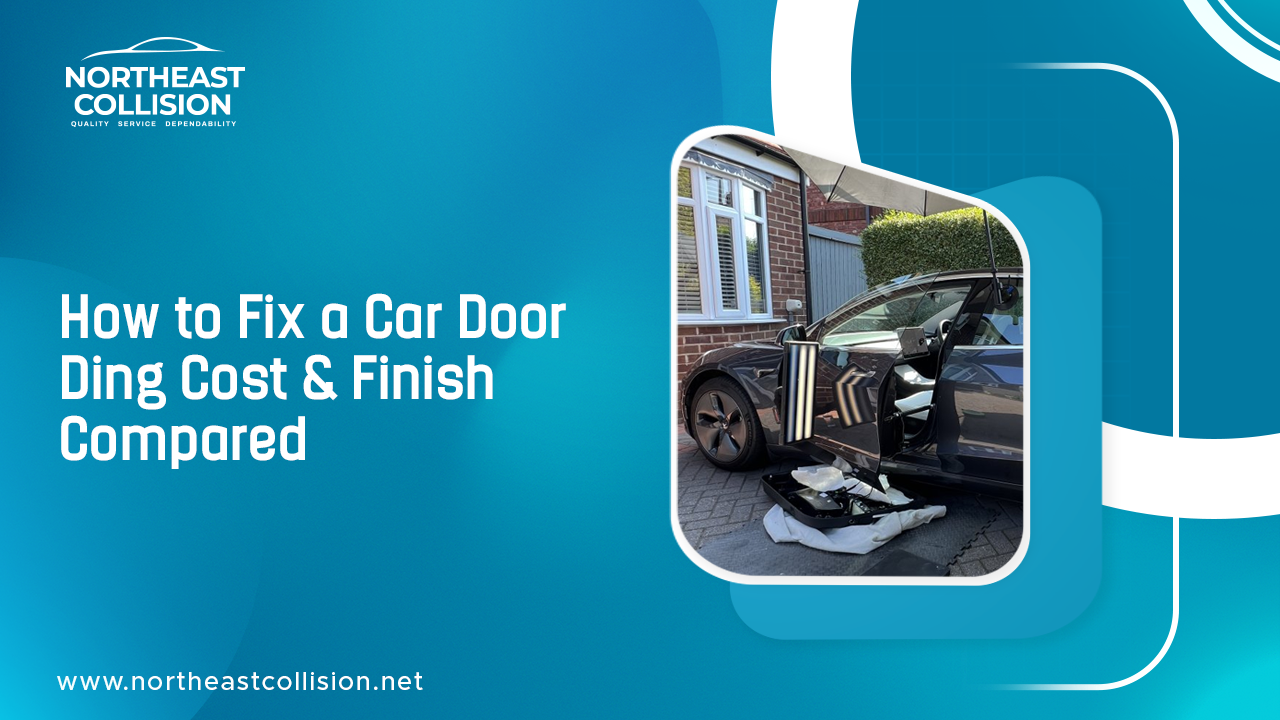
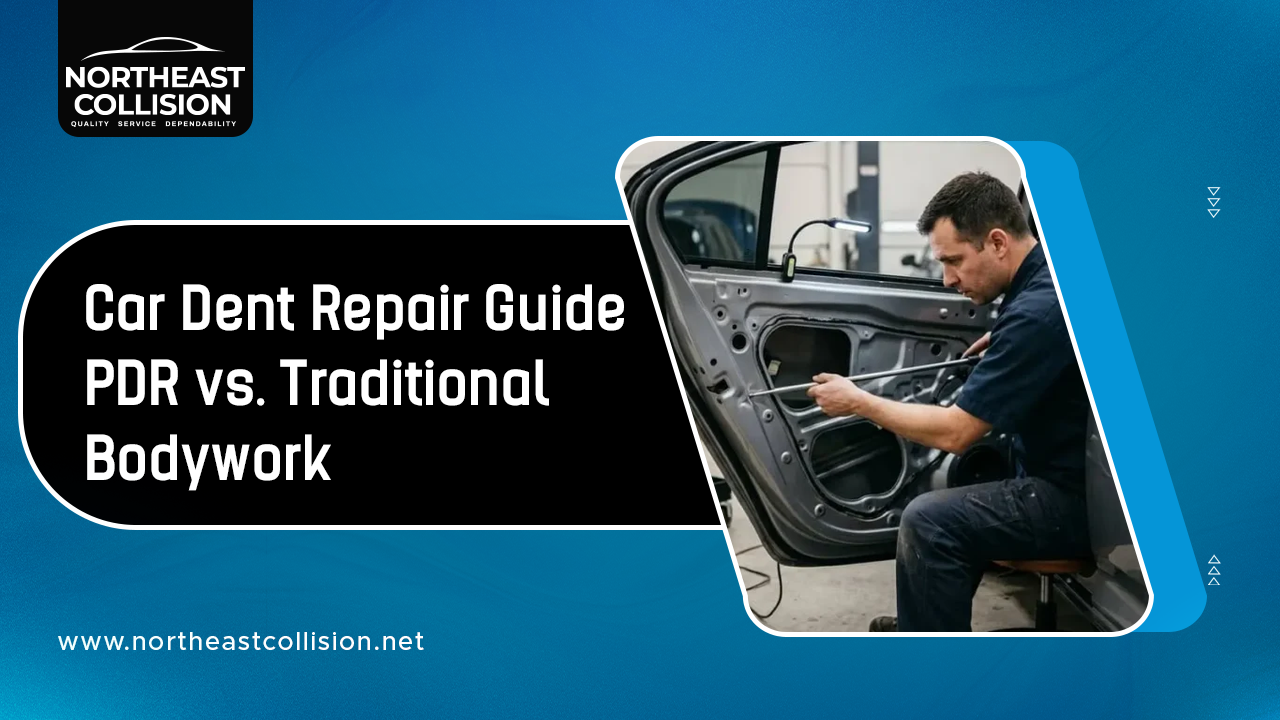
When paint is needed, a skilled shop can often refinish the damaged panel and blend the color into the next panel instead of repainting the entire side. Our guide to car paint color matching explains how that works. Our comparison of paintless vs. conventional dent repair covers which dents qualify for each method.
How Long Will the Car Be in the Shop?
Most fender benders take about 3 to 7 days to repair once parts are available, and a minor cosmetic repair can sometimes be done in 1 to 2 days. Parts delays, insurance approvals, and hidden damage can stretch that. Our guide to how long collision repair takes explains the timeline in detail.
Turn the First Fender Bender Into a Driving Lesson, Not a Punishment
A first accident is already a powerful lesson. It does not need to become a source of lasting shame. Once everyone is safe and the practical steps are handled, sit down with your teen and talk it through:
- What do you think happened?
- What would you do differently next time?
- Did speed, distraction, following distance, visibility, or pressure from another driver play a part?
Then turn the answers into a short driving checklist:
- Put the phone away before moving.
- Leave more following distance.
- Slow down before intersections and turns.
- Check mirrors and blind spots deliberately.
- Do not let impatient drivers rush you.
- When something feels unsafe, slow down and reassess.
If your teen drives local highways, our article on where crashes happen near Plainfield, NJ highlights stretches of Route 22 and I-287 worth practicing with extra care. The goal is not to make your teen afraid of driving. It is to show them that responsible drivers know how to respond when something goes wrong.
Getting Your Teen’s Car Repaired at Northeast Collision
If your teen’s car needs repair after a fender bender, Northeast Collision in Plainfield, NJ starts with a full inspection, including the sensors and parts behind the panels, so you know exactly what the car needs before work begins. Our technicians are I-CAR Gold Class trained, and our team works directly with most major insurance companies. From a small dent to complete collision repair, we explain your options in plain language. If the car is not safe to drive, we can arrange towing.
Need a second set of eyes on your teen’s car? Call (908) 226-3566 or book an appointment for an inspection.
Frequently Asked Questions
What should a teenager do after a fender bender?
Stay calm, turn on the hazard lights, check for injuries, and call 911 if anyone is hurt. Move to safety if possible, exchange information, take photos, collect witness details, call a parent, and call the police when New Jersey law requires it.
Should my teenager call me after a minor accident?
Yes. Make it clear that calling a parent is part of the plan, not something to fear. Your teen should first check for injuries and make sure everyone is safe, then call you, and then follow the police and insurance steps together with you.
Do we need to report a minor accident in New Jersey?
New Jersey law requires the driver to report a crash to the police if it causes injury or death, or property damage to any one person of more than $500. Because many minor repairs exceed $500, it is usually safest to call the police when another vehicle is involved.
Will my teen’s first accident raise our insurance premium?
It can, but there is no single answer. Premium changes depend on your insurer, your policy, who was at fault, your driving history, and the insurer’s rating rules. Ask your insurance company how this specific claim may affect your policy.
Should we get a repair estimate before filing an insurance claim?
It helps. Notify your insurer as your policy requires, and have the car properly inspected. A scrape that looks cosmetic may hide damage behind the panel, and an accurate assessment helps you decide whether to file a claim or pay yourself.
Should we fix a small fender dent right away?
Have it assessed first. A visible dent or scrape may not show the full picture, especially on a car with sensors or driver-assistance features. Repairing chipped paint promptly also keeps exposed metal from rusting.
Can every dent be fixed with paintless dent repair?
No. Paintless dent repair works best when the original paint is intact and the technician can reach the back of the panel. Deep creases, damaged paint, stretched metal, or hard-to-reach areas usually need conventional dent repair and refinishing instead.
How long does it take to fix a fender bender?
Most fender benders take about 3 to 7 days once parts are available, and a minor cosmetic repair can sometimes be finished in 1 to 2 days. Parts delays, insurance approvals, and hidden damage can add time.
Note on Pricing, Timelines, and Estimates
All repair times, ranges, and examples in this article are general guidance provided for information only. They are not a quote, offer, or guarantee of how long your repair will take or what it will cost. Legal and insurance information is general and is not legal advice; check current rules with the relevant authority and your insurer.
The actual repair method, timeline, and cost for your vehicle depend on its make, model, and year, the type and extent of visible and hidden damage, sensor and calibration requirements, manufacturer repair procedures, parts availability, and insurance approvals. Your final price and completion date will be confirmed only in a written estimate after our technicians complete a full inspection of your vehicle. If additional damage is found once work begins, we will contact you, and your insurer where applicable, before any additional work is done. Insurance coverage is determined by your policy and your insurer.