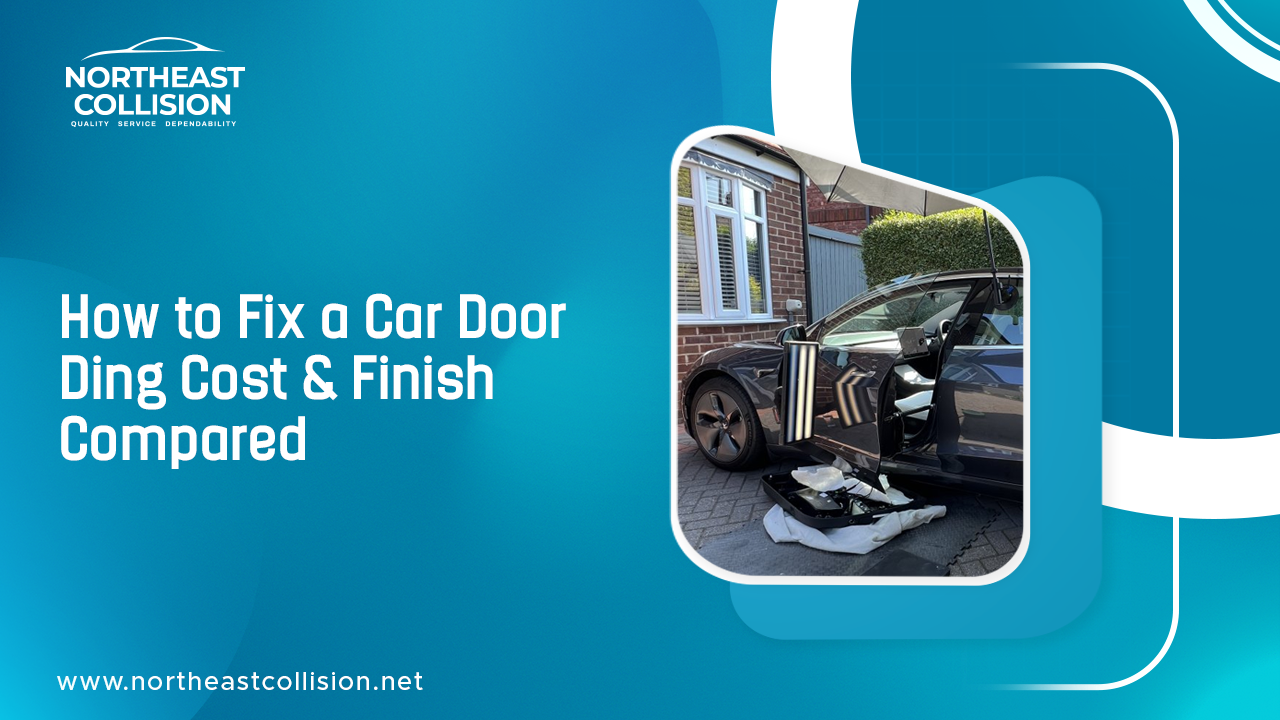
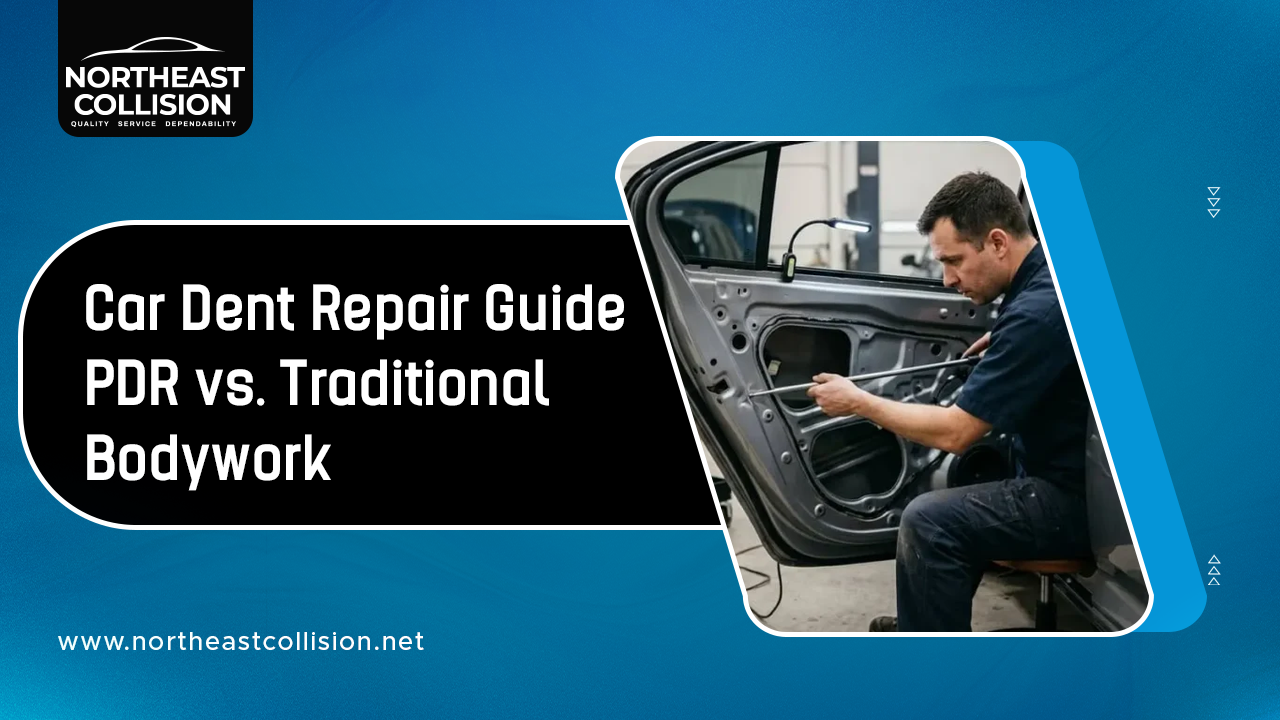
PDR is generally suitable when the paint is still intact, the dent is only fairly shallow, the metal is not greatly stretched or sharply creased, and the technician can access the back of the panel. The main reason why PDR will not work, however, is if the paint has been damaged: when the finish is cracked or broken through, conventional repair and refinishing will then be required.
What Paintless Dent Repair Actually Is?
Paintless dent repair allows a dented body panel to be restored without removing the original paint or applying new paint. A qualified technician uses specialized tools and applies careful pressure to restore the damaged metal to its original shape.
The aim is not merely to push the deepest portion of the dent outward; the metal surrounding the dent may also be under tension. The more important question is whether a technician can properly restore the bumper and surrounding components to meet the vehicle’s repair requirements.
The Four Conditions a Dent Must Meet for PDR
A dent is a strong PDR candidate when four things line up:
1. The paint is still there.
The original finish must not be cracked, peeled, or broken at the point of impact; if the paint is damaged, then merely reshaping the metal will not renew the finish.
2. The metal has not been severely stretched.
A shallow dent is more likely to regain its flat surface than a deep dent that has caused the panel to stretch significantly.
3. The text does not have any deep and sharp crease or fold.
A gentle dent and a sharply folded panel are quite different things to repair; the more concentrated and severe the damage, the more difficult it becomes to restore the original shape using PDR alone.
4. The technician is safe in accessing the back of the panel.
PDR requires restricted access to the affected area; if the technician cannot reach it without damaging another component or drilling an access hole, PDR might not be the appropriate option. I-CAR explicitly recommends against drilling access holes when carrying out PDR.
What Rules a Dent Out: Stretched Metal, Cracked Paint, Sharp Creases, Inaccessible Panels
Some damage is beyond what can be achieved with paintless dent repair.
Stretched metal is one of the biggest challenges. A deep impact can stretch the panel beyond what PDR can restore cleanly. Forcing severely stretched metal back into shape can leave visible distortion.
Cracked or broken paint is another major limitation. PDR is designed to preserve the existing finish, not replace it. If the impact has broken through the paint, the panel may need preparation and refinishing after the metal is repaired.
Sharp creases and folds can also make PDR unsuitable. Damage concentrated along a body line or panel edge can be especially difficult because these areas resist reshaping more.
Then there is access. A technician needs a safe way to work behind the damaged section. Bracing, reinforcements, interior components, adhesives, or other construction features can restrict access. If the four conditions aren’t met, conventional car dent repair may be the better route.
How Conventional Dent Repair Works When PDR Cannot
Traditional dent repair takes a different approach.
The damaged panel can be reshaped using body-repair tools, after which the surface should be prepared and refinished. If the damage is serious, the repair will have to include straightening the metal, applying the right filler where needed, sanding the repaired area, priming it, matching the vehicle’s paint, and then applying the finish.
Where a panel is so badly damaged that a technician cannot properly restore it, replacement might be the better course. The correct choice is one that properly restores the panel, not the one that involves the shorter procedure.
Cost Compared, and Why PDR Quotes Vary So Much
People usually look for the cost of paintless dent repair assuming that there will be a single fixed price, but there isn’t.
The price can change substantially based on:
- The size and depth of the dent
- The number of dents
- Where the damage sits on the panel
- How difficult the area is to access
- Whether the panel is steel or aluminum
- Whether a body line is involved
- How much time the technician expects the repair to take
Whether trim or interior components must be removed for access, since it is easy to reach, can be rather simple to deal with. One of similar size but located directly on a solid body line, on the other hand, will require much more careful work.
Stuff is also important. Auto body specialists can apply PDR to select aluminum panels, though aluminum’s stiffness requires distinct techniques to reshape. I-CAR does, in fact, list PDR as a possible solution for some aluminum exterior panels, noting that the material, the location of the damage, and the condition of the panel all affect the repair choice.
When you’re looking at dent repair services near me, it’s not a good idea to base your quote comparison solely on price; ask the shop which method it recommends and why.
Turnaround Compared
PDR usually has a shorter turnaround time because it eliminates many of the steps typically involved in conventional refinishing.
Auto body painters do not need to repeat the traditional filling, sanding, priming, painting, and curing process when preserving the factory finish. It is therefore possible to carry out a simple PDR repair considerably more quickly than with conventional bodywork.
Normal dent repair usually takes longer because it can involve multiple stages, especially if painting and color blending are required. If you’re looking for paintless dent repair near me, the appropriate question isn’t just ‘How quickly can you repair it?’ but whether PDR is actually suitable for the damage.
Warranty and Resale Value Compared
Because a skilled technician can preserve factory paint through proper PDR, owners frequently choose this method for minor dents.
There is also a benefit to keeping the original finish when you want to maintain the look of a more recent vehicle. Yet it would be wrong to suppose that all PDR repairs have the same impact on resale value or that traditional repairs will automatically reduce it.
There’s another point that many car owners fail to consider: the back of the panel. As I-CAR points out, PDR may affect the protective coating on the back of a panel during the repair, and therefore corrosion protection might need to be restored.
A good repair involves more than just hiding the dent when the workshop lights are on; it should properly restore and protect the panel.
What panels are typically considered suitable for PDR on a modern car?
PDR is generally regarded as a solution for dents on large exterior panels when the metal is accessible, and the original paint has not been damaged.
Potential candidates include:
- Door panels after minor parking-lot impacts
- Fenders with shallow dents away from complicated edges
- Hoods with suitable dings or hail damage
- Roof panels with certain shallow dents
- Quarter panels when access and damage location allow
- Aluminum exterior panels when the vehicle manufacturer permits PDR, and the technician has the appropriate experience.
The choice of panel material and its construction are still important; although aluminum can be repaired using PDR, it doesn’t behave exactly like steel and may therefore require different techniques.
Frequently Asked Questions
Is paintless dent repair better than traditional dent repair?
Neither method is superior overall, but owners usually benefit most from paintless dent repair when the paint is intact, and technicians can restore the metal without repainting. On the other hand, conventional repair is the more suitable option when the paint is damaged, the metal is severely stretched, access is difficult, or the damage is beyond what PDR can handle.
Is paintless dent repair less expensive?
It can be, especially when the dent is straightforward and doesn’t require painting or extensive bodywork. However, paintless dent repair cost varies with the dent’s size, depth, location, material, access, and complexity.
Can PDR fix a deep dent?
Sometimes, but depth alone does not determine whether PDR will work. The technician also needs to consider the metal’s stretch, paint condition, sharp creases, location, and access. A deep but smooth dent with intact paint may have different repair potential from a smaller dent with a sharp crease.
Can PDR fix dents in aluminum panels?
Yes, PDR can be used on some aluminum exterior panels. However, aluminum has different repair characteristics from steel, and the location and severity of the damage matter. You should follow vehicle-specific repair information.
Does paintless dent repair harm the original paint?
PDR aims to maintain the current finish, but the process must still be carried out carefully. I-CAR warns that dent removal can damage the finish, leading some manufacturers to require technicians to check for micro-cracking after PDR.
How can I select a dent repair shop in my area?
Look for a collision or body repair facility that can explain why your dent qualifies for PDR or why conventional repair is necessary. Ask about the technician’s experience with your vehicle’s panel material, the expected repair method, turnaround time, and warranty before authorizing the work.
Should I search for “dent repair near me” or “paintless dent repair near me”?
If the damage is a small ding or dent with intact paint, searching for paintless dent repair near me can help you find specialists who offer PDR. If you’re unsure whether the damage qualifies, a full-service collision repair shop can inspect it and recommend the appropriate car dent repair method.