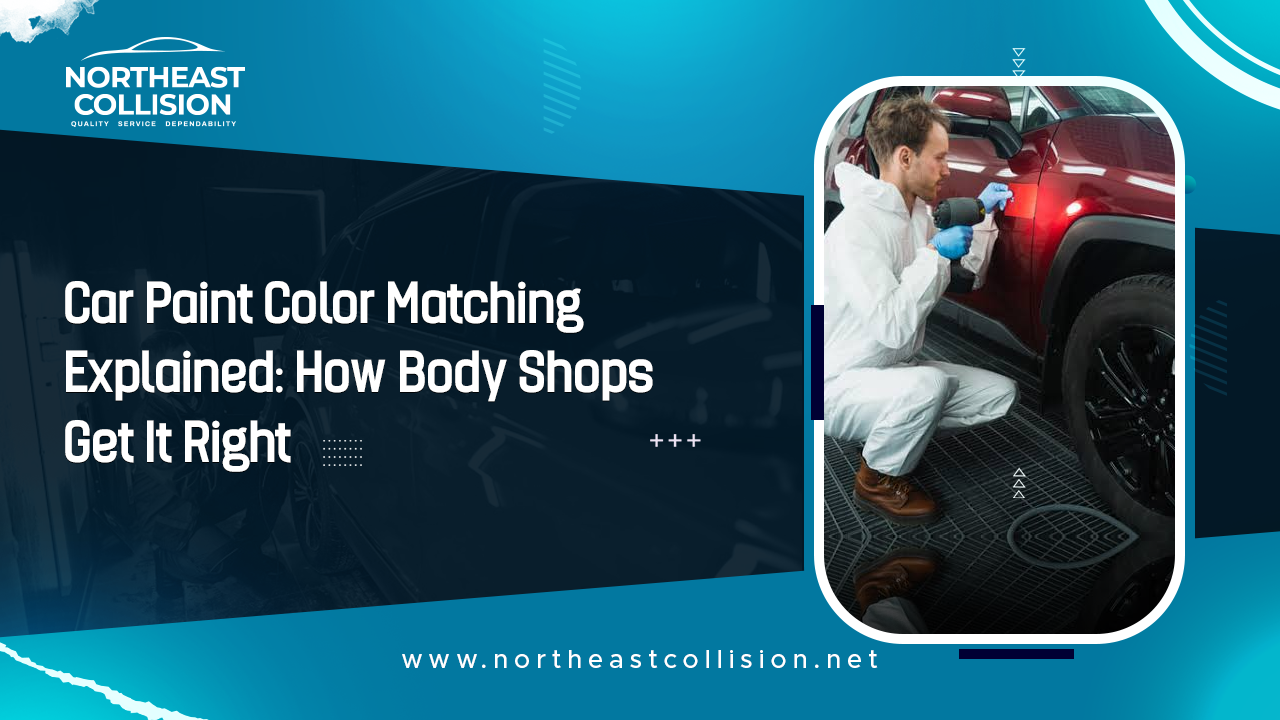
A good car paint shop matches your car’s paint color using technology, not just by looking at color samples. Every car has a unique paint code from the factory. Today’s repair shops use computerized color-matching, spectrophotometer scans, and controlled spray booths to recreate your car’s exact color on the repaired area.
When done right, the repair is invisible, even in sunlight or on difficult finishes like metallic or pearl. Color matching takes both science and skill, and missing a step can leave you with a panel that almost matches but not quite. This guide explains how professionals get color precision, why repairs sometimes look off, and what makes a perfect match.
Why Paint Fades, And Why a Fresh Panel Can Look “Off” Without Blending
Many drivers are surprised to see that even a perfect paint formula can look off if it’s not applied with the right technique. This happens because your car’s paint has changed from its original color over time.
UV Exposure and Oxidation
Sun, weather, and time slowly wear down your car’s clear coat and paint. This fading doesn’t happen evenly—hoods and roofs usually fade faster than doors or lower panels that get less sun.
Why an Exact Formula Isn’t Always Enough
Even with the exact factory formula, a new panel can look brighter or more colorful than the rest of the car because the old paint has aged. That’s why color matching depends on technique as much as the formula itself.
The Solution: Blending
Experienced painters use blending, spreading the new paint a bit into nearby panels and fading it out gradually instead of stopping at the edge. This smooths out the difference between old and new paint, making the repair invisible instead of obvious. Blending is often what makes a repair disappear.
The Color Matching Process: From Paint Code to Flawless Blend
Matching paint exactly takes several steps, not just one. If any step is skipped, you’re more likely to see a mismatch. Here’s how good shops do it.
Step 1: Locate the Factory Paint Code
Each car has a paint code from the manufacturer, usually found on a sticker in the door jamb, glove box, trunk, or under the hood. This code tells the shop the exact formula your car was painted with at the factory.
Step 2: Computerized Color Scan
Since paint fades differently on every car, the paint code alone may not be enough. Technicians use a spectrophotometer, a handheld scanner, to measure your car’s current paint color and compare it to the original formula.
Step 3: Formula Retrieval and Adjustment
The scan results are checked against a big digital paint database, which suggests the closest match. Sometimes, small adjustments are made based on your car’s paint code and its current condition.
Step 4: Spray-Out Test Card
Before painting your car, technicians spray the chosen formula onto a test card and compare it to your car’s panel in different lighting. This helps catch any small differences before they become permanent.
Step 5: Application and Blending
After confirming the formula, the panel is painted and blended into the surrounding paint using methods that fit your car’s finish.
Step 6: Clear Coat and Cure
A final clear coat is added and cured, protecting the paint and giving it the same shine and depth as the rest of your car.
Every step matters because color matching can go wrong more easily than people think. Good shops set up their process to catch mistakes before they reach your car.
The Role of the PPG Paint System in Computerized Color Matching
Not all paint systems are the same. The equipment and materials a shop uses can really affect your results.
Many professional collision repair centers rely on the PPG paint system, one of the most widely used and trusted platforms in the automotive refinishing industry. PPG’s system pairs an extensive, continuously updated formula database with digital color-matching tools, giving technicians access to accurate starting formulas for a vast range of makes, models, and model years, including regional and mid-cycle color variations that generic databases often miss.
The main benefit of this system is consistency. Instead of guessing or using a generic formula, computerized matching takes out the guesswork before mixing paint. It also lets shops adjust for paint that has aged, so the formula matches your car’s current color, not just the original one.
This technology doesn’t replace skilled painters—it helps them. The computer gets the color very close, and the painter’s skill finishes the job.
Why a Controlled Downdraft Spray Booth Matters for Finish Quality
Even the best paint formula can be ruined by a poor spraying environment. That’s why the spray booth is so important for color matching.
A downdraft spray booth is a sealed, climate-controlled space made for car painting. Air comes in through ceiling filters and moves down through the floor, keeping dust and overspray away from the car so nothing settles on the wet paint.
This matters for color precision specifically:
- Consistent temperature and humidity allow paint to cure at a predictable rate, which affects gloss level and color depth.
- Filtered, controlled airflow prevents dust and particles from creating texture inconsistencies that can make a color look different once cured.
- Even lighting conditions allow painters to accurately judge color and blending in real time, rather than working in variable garage lighting.
- Reduced contamination risk means fewer surface imperfections that could require rework, and every additional layer or repair increases the risk of a visible mismatch.
Auto body paint shop might have the best paint formula, but without a well-kept spray booth, the finish can still be uneven. The booth is a key part of getting the color right.
Metallic, Pearl, and Tri-Coat Finishes: Why They’re Trickier to Match
Matching solid colors is mostly science, but metallic and pearl finishes are more like an art. These finishes are much harder to match, and here’s why.
Metallic Finishes
Metallic paint has tiny aluminum flakes in the color layer. These flakes reflect light in different ways depending on the angle, so the paint can look brighter or change color as you move around the car. Matching metallic paint means controlling the color and also the size, amount, and direction of the flakes, which depends a lot on how the paint is sprayed.
Pearl Finishes
Pearl paints use mica particles, sometimes with metal flakes, to create a color that shifts depending on the light and angle. These finishes usually have several layers: a base color, a pearl layer, and a clear top coat. If any layer is applied differently, you can see a difference between old and new paint.
Tri-Coat Finishes
Tri-coat finishes add a third layer for more depth and color detail, and are often found on luxury cars. Matching these needs careful control of each layer, because a mistake in one can affect the whole finish.
With metallic, pearl, and tri-coat finishes, blending is even more important than with solid colors because these paints change more with light and angle. An experienced technician knows how to adjust spraying and blending for these effects, so skill and equipment are just as important as the paint formula.
Getting a Perfect Match Comes Down to Process and Experience
Getting the color right isn’t about just one tool. It takes the right paint code, computerized scanning, a good paint system like PPG, a well-controlled spray booth, and a skilled technician who knows how to blend and adjust for your car’s finish.
If you need a scratch paint repair fixed, a full car painting, ceramic coating or any kind of car paint services in New Jersey, picking a shop that follows the full process—not just the paint—will decide if your repair blends in or stands out in the light.
Frequently Asked Questions
Can a body shop match my car’s exact paint color?
Yes. With your car’s factory paint code and computerized color-matching, a good shop can recreate your exact color and adjust it for any fading or aging in the nearby paint.
Where is my car’s paint code?
You’ll usually find the paint code on a sticker inside the driver’s door jamb, glove box, trunk lid, or under the hood, depending on your car. If you’re not sure, a body shop technician can help you find it.
Why does a repaired panel sometimes look slightly different?
This often happens if the repair skips blending or uses the factory formula without adjusting for faded paint. Since panels change color over time from sun exposure, even a perfect formula can look off without proper blending and adjustments.
How do shops match metallic and pearl paint?
Matching metallic and pearl finishes takes careful control of spraying, gun distance, and layering to copy how light interacts with the flakes or mica in the paint. Technicians use test cards to check the match in different lighting before painting the car, then blend the new paint into nearby panels to smooth out any differences.