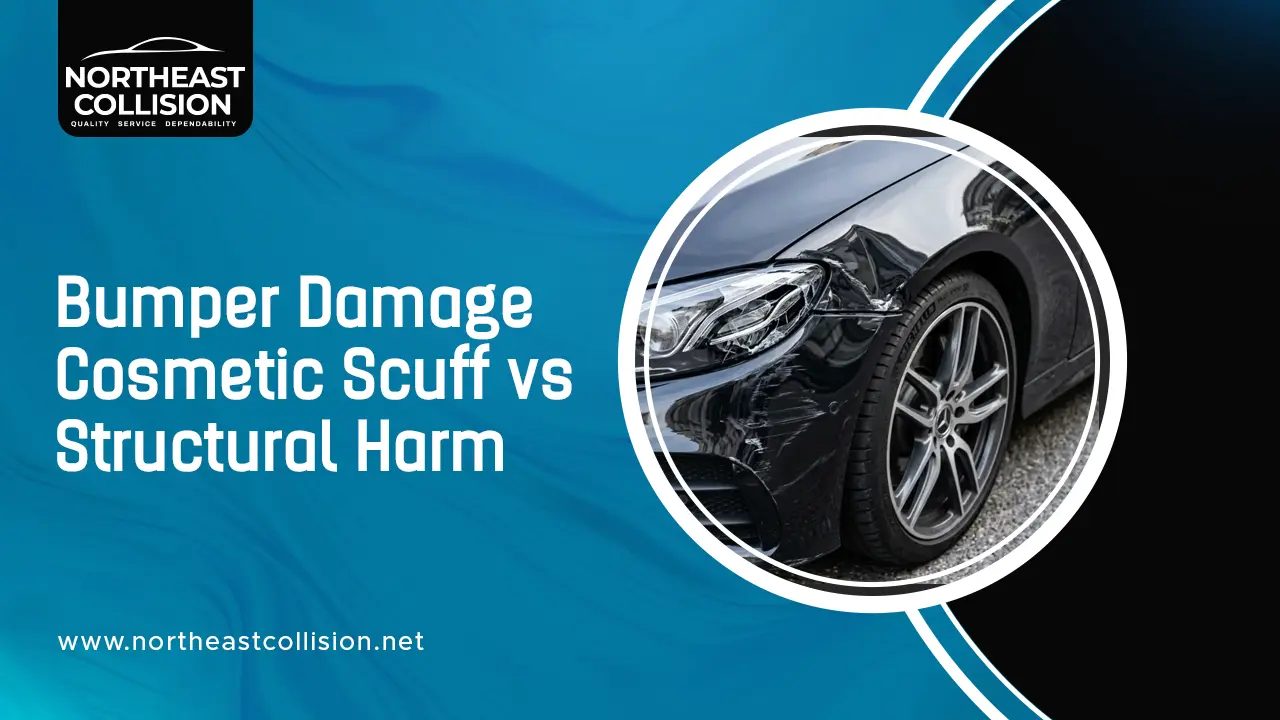

When you’re standing in your driveway assessing your vehicle after a wreck, it’s easy to get fixated entirely on the highly visible, “ugly” damage. You see the smashed-in door, a hood crumpled like a soda can, or a bumper cover hanging by a thread. In the automotive industry, we call that the “skin” of the car.
But the real concern from a safety and engineering standpoint isn’t what’s on the surface; it’s the “skeleton” hidden directly underneath, technically known as the unibody frame. That internal framework is quite literally the only line of defense standing between your family and the violent kinetic force of an impact.
In a modern vehicle, structural integrity isn’t about building an “indestructible” tank. It’s about engineering a vehicle to fail and collapse in a highly specific, mathematically controlled sequence. If a collision repair shop fails to restore that internal skeleton to its exact factory blueprints, the car might look flawless on the outside, but it will completely fail to protect you if you are ever involved in a secondary accident.
The Unibody: A High-Tech Safety Cage
Most modern passenger vehicles on the road today do not feature a separate frame bolted to a body. Instead, the entire structural shell of the car is engineered and welded together into a single, cohesive unit. While this unibody design makes cars lighter, more agile, and significantly more fuel-efficient, it also means that impact energy travels dynamically throughout the entire vehicle.
Because of this interconnected design, a heavy hit to the front-right corner can actually pull the rear-left roof pillar completely out of alignment. If a budget repair shop simply hangs a new fender on the front and calls it a day, they are actively ignoring the fact that the vehicle’s “spine” remains twisted.
At a professional facility like Northeast Collision, we utilize computerized laser-guided measuring systems to track down these invisible structural shifts. We ensure the entire unibody frame is perfectly square and true before we ever think about installing new exterior body panels.
Why You Can’t Just “Hammer Out” Modern Automotive Steel
Back in the day, an old-school auto body man could use a torch, a heavy hammer, and brute strength to straighten almost any bent piece of steel. That manual approach is fundamentally dead when dealing with today’s vehicles. To meet modern safety standards, manufacturers now build critical protection zones—like your side door pillars and roof rails—out of Ultra-High-Strength Steel (UHSS) and boron alloys.
This advanced metal is incredibly strong, but it is engineered to be “one-and-done.” Once this steel is bent or kinked in an accident, its internal molecular structure is permanently altered.
The Danger of Mechanical Pulling: If a shop attempts to “cold-pull” UHSS back into shape or applies excessive heat with a traditional welding torch, the metal becomes brittle and micro-fractured. It completely loses its engineered ability to absorb and deflect energy.
In a certified structural collision restoration, these compromised sections must be carefully cut out along strict factory lines and replaced with brand-new OEM (Original Equipment Manufacturer) collision parts using factory-specified cold-joining or specialized welding techniques. It is the only definitive way to guarantee the vehicle’s crumple zones will perform exactly as intended in a future crash.
The Three Pillars of a Structural Restoration
A true quality repair focuses heavily on the structural elements you will never see once the vehicle’s exterior panels are reassembled.
| The Structural Pillar | The Technical Process | Why It Matters for Safety & Longevity |
| Computerized Laser Alignment | Syncing the vehicle to digital manufacturer blueprints on a dedicated frame rack down to a single millimeter. | Ensures advanced ADAS sensors, suspension components, and doors align and function perfectly. |
| Squeeze-Type Resistance Spot Welding (STRSW) | Utilizing specialized high-pressure welding equipment that perfectly replicates assembly-line manufacturing. | Creates structural joins that match factory strength without overheating or weakening the surrounding metal. |
| Deep-Cavity Corrosion Restoration | Manually reapplying specialized zinc-rich primers and heavy cavity waxes inside the internal frame rails. | Replaces the factory anti-rust coatings destroyed during welding, preventing the frame from rotting from the inside out. |
The Real-World Danger of a “Cheap” Structural Repair
It is a sobering thought, but choosing a budget-tier, uncertified repair shop can effectively turn your vehicle into a rolling safety hazard. If the vehicle’s crumple zones are rendered too stiff due to improper, heavy-handed welding, or left too weak from improper pulling, the violent energy of a subsequent crash won’t be safely absorbed by the vehicle—that energy will be transferred directly to the passengers inside the cabin.
Furthermore, if the structural integrity of the frame is compromised by even a fraction of an inch, your advanced airbag deployment system may not function correctly.
The precise timing of an airbag deployment—down to the exact millisecond—is digitally calculated based on how crash pulses vibrate through the vehicle’s frame rails to the electronic sensors. If the underlying frame structure is structurally altered or “mushy,” the vehicle’s computer brain may not detect the crash pulse until it is milliseconds too late, completely disrupting your airbag timing.
Precision Mapping is Your Peace of Mind
Your vehicle is a significant financial asset, but more importantly, it is a highly engineered safety capsule designed to protect your family. When you select a collision center that invests in computerized frame infrastructure and rigorously adheres to manufacturer-specific repair procedures, you are buying more than just auto body dent repair—you are buying the absolute certainty that your vehicle remains a safe sanctuary on the road.
Don’t gamble with a vehicle repair that is only skin-deep. Ensure your vehicle’s underlying skeleton is just as structurally sound as the day it rolled off the assembly line. Contact Northeast Collision today to schedule a comprehensive structural inspection and restore your total peace of mind.
Frequently Asked Questions (FAQs)
1. How can I tell if my vehicle has sustained hidden structural frame damage?
While massive structural shifts are visually obvious, minor frame deviations are often completely invisible from the outside. Telltale warning signs include a vehicle that consistently “pulls” to one side even after a wheel alignment, uneven gaps or rubbing between your doors, hood, and trunk panels, or strange creaking noises when driving over speed bumps. The only way to know for certain is to have a certified shop mount the vehicle onto a computerized 3D measuring rack.
2. Can a bent unibody frame always be safely repaired?
In many standard collision scenarios, yes—a unibody frame can be safely realigned to factory zero using precise hydraulic frame towers. However, if the main structural frame rails are deeply kinked, cracked, or torn, those specific sections cannot be straightened and must be cut out and replaced entirely. If the structural damage is widespread throughout the central safety cage, your auto insurance provider will typically declare the vehicle a total loss because the cost of a safe, certified structural restoration exceeds the actual market value of the car.
3. Will my vehicle drive differently after undergoing major structural frame repairs?
Not if the restoration is executed correctly. If an auto body shop utilizes a computerized 3D laser-measuring system to achieve exact “zero-point” factory alignment, your vehicle’s steering geometry, suspension tracking, and ride dynamics will be fully restored to pre-accident conditions. The vehicle will handle, track, and ride exactly as it did before the collision.
4. Why are structural frame repairs significantly more expensive than cosmetic auto body repairs?
Structural restoration is a highly technical, labor-intensive process that requires specialized engineering equipment. It often demands hours of meticulous mechanical teardown just to safely expose the underlying frame rails, followed by precision time spent on a calibrated frame rack, and the implementation of expensive, specialized welding tech. It is a slow, safety-critical discipline that cannot be rushed.
5. Will my car’s crash-test safety rating remain intact after a structural repair?
If your chosen collision center strictly follows OEM (Original Equipment Manufacturer) repair procedures, uses factory-approved welding techniques, and installs genuine structural components, your vehicle’s original safety ratings are fully preserved. This is precisely why choosing a factory-certified, properly equipped auto body shop is so critical to your long-term safety.