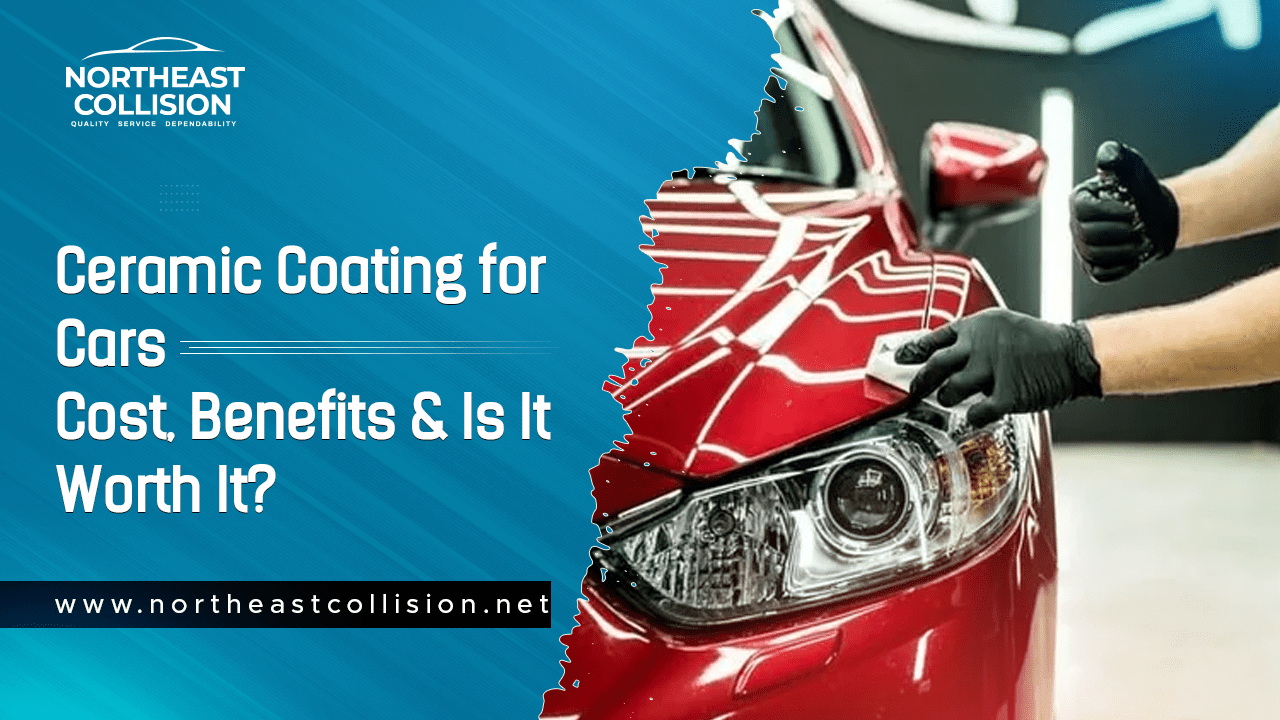
Ceramic coating is a liquid polymer applied over your car’s paint that bonds with the clear coat to create a tough, glass-like layer. Its main purpose is to protect your paint from UV rays, oxidation, and light chemical damage. It also makes the surface water-repellent, so water, dirt, and grime slide off easily. While it won’t stop rock chips or deep scratches, it helps most daily drivers keep their paint looking fresh for years instead of fading after only a few.
Those are the basics. If you’re curious about whether ceramic coating is worth the price, keep reading. The answer depends on your car, your budget, and how much you value keeping it looking its best.
How Ceramic Coating Works
Put the marketing aside for a moment. Ceramic coating is made of silicon dioxide (SiO2) in a liquid solution. When it’s applied to clean, prepped paint, the solvent evaporates and the SiO2 molecules bond with the clear coat at a molecular level. Instead of just sitting on top, the coating actually fuses with your paint.
This bonded layer does two main things. First, it’s much harder than the clear coat below, so it stands up to everyday chemical exposure like bird droppings, tree sap, and road grime that would otherwise damage unprotected paint. Second, it’s hydrophobic, meaning water can’t stick to it. Instead, water forms tight droplets that roll off, carrying away loose dirt.
This is different from wax, which just sits on the surface as a thin layer and wears off in a few weeks. Ceramic coating bonds with the paint and lasts for years, which explains the higher cost and longer durability.
The Real Benefits
Gloss that doesn’t fade fast
Ceramic coating makes your paint look deeper and shinier, giving it the “wet look” that people try to get with frequent waxing. Since the coating doesn’t wash away or oxidize like wax, the shine lasts for months instead of fading in just a few weeks.
UV and oxidation protection
Constant sun exposure causes paint to fade and oxidize. A ceramic layer acts as a protective barrier, absorbing UV rays instead of letting them reach your clear coat. This slows down the fading and chalking you often see on older, unprotected cars.
Easier washing, less swirling
Since dirt and grime don’t stick directly to the paint, a quick rinse removes much more than it would on bare clear coat. Less scrubbing means fewer swirl marks from washing. In fact, poor washing habits are one of the most common ways paint gets damaged over a car’s life; not collisions.
Chemical resistance
Bird droppings, bug splatter, tree sap, and industrial fallout can be acidic or sticky enough to damage paint if left too long. A ceramic layer gives you extra time before this damage becomes permanent and makes cleanup easier if it does happen.
Water spotting resistance
Since water beads up and rolls off instead of sitting flat, you get fewer hard water spots baked in by the sun. This is especially helpful if you don’t have a garage.
Better resale presentation
A car with shiny, well-maintained paint looks better in photos and in person when you’re ready to sell or trade it in. Buyers notice faded or dull paint, even if they can’t say exactly why. A coated car that’s been washed regularly often looks newer than its mileage suggests, which can help at appraisal time.
Honest Limits, What Ceramic Coating Won’t Do
Most detailing shops don’t talk much about this part, but it’s important for anyone searching online or car owners who want honest answers.
It is not scratch-proof
Ceramic coating makes the surface harder, but it’s still a thin layer, usually just a few microns thick. A key, a shopping cart, or rough brush washing can still scratch through it and into the clear coat. “Scratch-resistant” is true, but “scratch-proof” is just marketing. If a shopping cart or careless parking leaves a ding, dent repair services can usually fix the panel before the area is recoated.
It is not a substitute for paint protection film (PPF)
PPF is a thick urethane film, usually 6 to 8 mils thick, made to absorb rock chips and impacts. Ceramic coating doesn’t offer that kind of protection. If you drive on highways often or park near gravel, you’ll still get rock chips with ceramic coating alone. And if the damage goes beyond a chip, accidental car repair services can address the deeper impact damage that no coating is designed to prevent.
It still needs proper paint prep
Ceramic coating sticks to whatever is already on your paint. If there are swirl marks, oxidation, or dirt when it’s applied, the coating will seal those flaws in until it wears off or is removed. That’s why paint correction before applying the coating is a must if you want a good-looking finish. The kind of prep work that an auto body paint shop does as a matter of course.
It doesn’t last forever
Depending on the product, ceramic coating slowly wears down from sun, washing, and oxidation. Sooner or later, it will need to be reapplied or refreshed.
Cost Tiers and How Long Each One Lasts
Prices depend on the quality of the coating, the size of your vehicle, and how much paint correction is needed. Here’s a realistic look at what you’ll usually find in the market.
| Tier | Typical Cost | Durability | What You’re Getting |
| Consumer/DIY kits | $50–$200 | 6 months–1 year | Retail SiO2 sprays or wipe-on kits applied at home; minimal prep, shorter bond life |
| Entry-level professional | $500–$900 | 1–2 years | Single-layer professional-grade coating, basic wash/clay prep |
| Mid-tier professional | $900–$1,500 | 2–4 years | Multi-layer application, paint decontamination, light paint correction |
| Premium/multi-year coating | $1,500–$3,000+ | 5+ years (some warrantied 7–10 years) | Full paint correction, multiple coating layers, sometimes paired with a wheel/glass/trim coating package |
Several factors can raise or lower the cost: the size of your vehicle (a large SUV needs more product and labor than a coupe), the condition of your paint (more correction means more work), and whether you’re coating just the paint or also adding wheels, glass, and trim.
Ceramic Coating vs. Wax vs. Paint Protection Film
These three are constantly lumped together, but they solve different problems.
Ceramic coating vs. wax:
Wax is a soft, natural or synthetic layer that sits on top of your paint. It gives a nice shine and some protection, but it wears off in 4–8 weeks from washing, sun, and weather, so people who use wax usually reapply it every month. Ceramic coating bonds with the paint, lasts for years, and provides real chemical and UV protection that wax can’t match. Wax is cheaper and easier to apply yourself, while ceramic coating is a long-term investment.
Ceramic coating vs. paint protection film:
PPF protects against physical impacts, rock chips, road debris, and minor scratches. Ceramic coating focuses on chemical and UV protection and makes cleaning easier. They work well together, not against each other. Many owners who want their paint to last use PPF on high-impact areas like the front bumper, hood, and mirrors — and if that area already has damage from a prior fender-bender, bumper collision repair services can restore the panel before PPF or coating goes on — while applying ceramic coating on the rest of the car, or even over the PPF for extra shine and water resistance.
In short: use wax for a quick, affordable shine; PPF for protecting areas that get hit by rocks and debris; and ceramic coating for long-lasting gloss, chemical resistance, and easier cleaning for the whole car.
Why Professional Application Matters
DIY ceramic coating kits are available, and they do offer some protection; however, there’s a real difference between a DIY job and a professional result, and the result comes down to three main factors: paint prep and decontamination
Before a professional applies ceramic coating, the paint is washed, clay-barred to remove contaminants, and usually polished to fix swirl marks and light oxidation. If you skip this step, every flaw gets sealed under the coating. Most DIY jobs skip or rush this part.
Controlled environment
Ceramic coating needs to cure without dust, humidity, or temperature changes getting in the way. A regular garage with airflow and changing temperatures isn’t as good as a controlled shop. If the coating doesn’t cure properly, you can end up with streaks, high spots, or uneven bonding.
Product-grade difference
Professional installers use coatings with a higher concentration of SiO2 than what you find in consumer kits. That’s a big reason why professional coatings last for years instead of just months.
If you’re investing in a coating that’s supposed to last for years, how it’s applied is just as important as the product you choose.
Is It Worth It?
For most people planning to keep their car for several years and wanting it to look good with less effort, ceramic coating is worth it. The cost of a mid-tier coating is about the same as two or three professional detailing jobs, but it lasts for years and means you’ll need detailing less often.
It’s less worthwhile if you lease your car short-term, rarely wash it, or expect “scratch-proof” results that no coating can deliver. In those cases, it’s better to save your money.
It’s also important to be honest about your approach to maintenance. Ceramic coating makes it easier to keep your paint looking good, but you still need to wash your car regularly and use the right techniques. Avoid automatic brush car washes that can cause scratches, and have the coating checked from time to time. If you often go months without washing your car, ceramic coating will help, but it won’t make neglected paint look brand new.
If your car has recently been in an accident, it’s worth having a post collision inspection done first, since any hidden panel or paint damage should be addressed before a coating is applied on top of it. If you’re seriously considering ceramic coating, get a quote based on your car’s real paint condition instead of just looking at online prices. That’s the best way to find out what kind of paint correction and coating your car actually needs. The team at NorthEast Collision can check your vehicle, explain your options, and recommend the right ceramic coating for its condition, so you can make a confident, informed choice.
Frequently Asked Questions
How long does ceramic coating last?
It depends on the product tier. DIY kits usually last 6 months to a year. Professional coatings range from 1–2 years for entry-level applications up to 5 years or more for premium multi-layer coatings, with some manufacturers offering 7-10 year warranties on their top products.
Is ceramic coating worth the money?
For most owners keeping their car long-term, yes. It reduces how often you need detailing, protects paint from UV fading and chemical etching, and keeps gloss looking sharp for years rather than weeks. It’s less worth it if you don’t plan to keep the car long or you’re expecting scratch-proof results, which no ceramic coating provides.
Ceramic coating vs. wax: What’s the difference?
Wax sits on top of the paint as a soft film and breaks down within weeks, requiring reapplication about once a month. Ceramic coating chemically bonds to the clear coat and lasts for years, offering stronger UV, chemical, and hydrophobic protection. Wax is cheaper and more DIY-friendly; ceramic coating is a longer-term investment with less upkeep.
Can I apply ceramic coating myself?
Yes, consumer-grade kits are available for home application and do offer real, if shorter-lived, protection. The tradeoff is durability and finish quality. Professional applications include paint decontamination, correction, and a controlled curing environment that most home setups can’t replicate, which is why professional coatings typically last significantly longer and look more consistent.